Underground Cable Tracer Explained: A UK Buyer's Guide
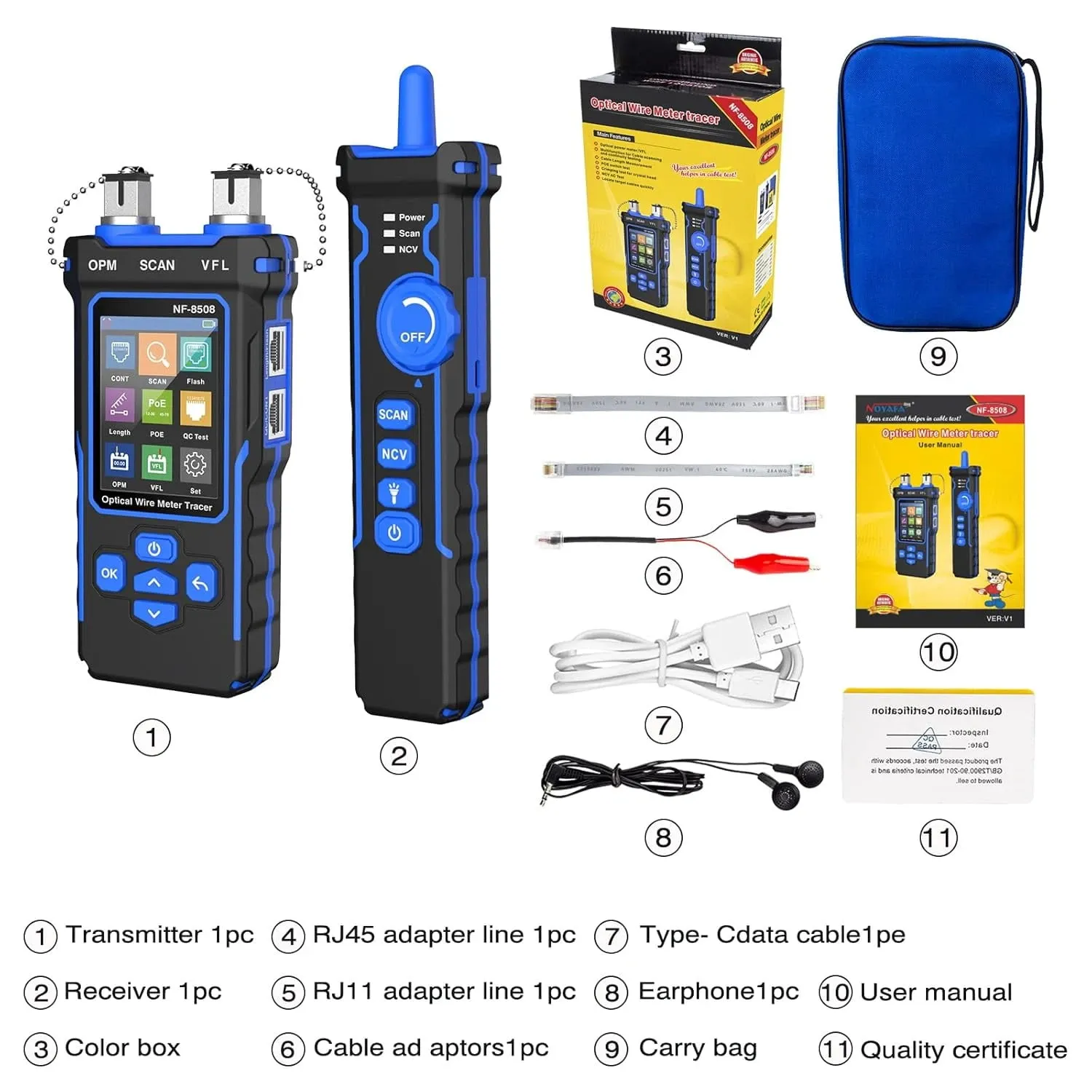
TL;DR: An underground cable tracer is used to locate buried electrical or communications cables before digging, fault-finding or maintenance work. In the UK, it helps contractors, estates teams and installers reduce strike risk, follow HSE good practice, and confirm cable routes more accurately. Based on our testing of multi-function cable diagnostic tools in real-world commercial environments, the best choice depends on cable type, tracing depth, signal clarity, site conditions and whether you also need Ethernet, PoE or fault-finding functions once the cable enters the building.
Key Takeaways
- An underground cable tracer helps locate buried cables, identify routes, and reduce the risk of accidental strikes during maintenance or installation work.
- In the UK, safe tracing matters for contractors, facilities teams, installers, local authorities, schools, warehouses, and NHS estates where hidden cable damage can cause costly disruption.
- The best buyer’s choice depends on cable type, tracing depth, signal clarity, site conditions, and whether you also need Ethernet, PoE, mapping, and fault-finding functions.
- A multi-function tester can reduce the number of separate tools engineers carry, especially when above-ground network diagnostics are also part of the job.
- Before buying, check compatibility, ease of use, build quality, and whether the device supports faster fault isolation across copper network infrastructure.
An underground cable tracer is a tool used to find the route of buried cables without digging first. It works by detecting a signal from a cable below ground so that engineers can trace its path more safely and avoid accidental damage during excavation or maintenance.
One missed buried cable can stop a project in minutes. Whether you are opening a trench at a school, diagnosing an external run at a warehouse, or checking service routes across a healthcare estate, using an underground cable tracer is often the difference between controlled work and expensive disruption.
For UK buyers, choosing the right tool is not simply about finding “a detector”. Instead, it is about buying equipment that helps you trace with confidence, work more safely around existing services, and diagnose faults quickly when downtime matters. This is especially true for contractors and IT teams who deal with both buried lines and internal network cabling. In those environments, carrying multiple testers slows jobs down.
EthernetCabl is built around that practical reality. Its core message is straightforward: professional PoE network tester and network cable line tester technology that replaces multiple tools with one 9-in-1 device. If your role includes tracing, mapping and diagnosing Ethernet, PoE and fibre faults instantly once cables emerge inside comms rooms or plant areas, that wider capability can save time on every visit.
So, this guide explains what an underground cable tracer does, how it works, what UK buyers should look for, and when a multi-function network testing approach makes the most sense.
What is an underground cable tracer?
An underground cable tracer is a specialist tool used to locate buried cables by applying or detecting a signal along the route of a conductor. Put simply, it helps an engineer follow where a cable runs beneath the ground before excavation starts.
These tools are commonly used in construction, maintenance, utilities support, estates management and telecoms-related work. In practice, they help users:
- Locate buried electrical or communications cables
- Identify likely routing before excavation
- Narrow down fault locations
- Reduce accidental damage to existing infrastructure
- Confirm whether known plans match real-world installation routes
For buyers in the UK market, this matters because many sites have layered infrastructure added over decades. Extensions, retrofits and temporary works often leave incomplete records. Even where plans exist, actual cable paths may differ from drawings due to on-site adjustments made during earlier installations.
Why is underground cable tracing important in the UK?
The UK places strong emphasis on avoiding utility strikes and protecting workers during excavation. This is not just best practice; it is central to site safety. According to the Health and Safety Executive (HSE), striking underground services can cause serious injury and significant disruption. Therefore service detection remains a critical part of safe digging procedures under HSG47 guidance on avoiding danger from underground services.
This has practical consequences across British workplaces:
- NHS estates: hidden service damage can interrupt critical systems or delay access to essential departments.
- Schools and universities: buried cable faults can affect security gates, outbuildings or temporary classrooms.
- Industrial sites: external data links often support CCTV, access control or networked machinery.
- Commercial developments: last-minute trenching without proper tracing increases cost exposure dramatically.
- Council properties and public sector estates: ageing infrastructure frequently means incomplete documentation.
The result is simple: if you may be working near hidden infrastructure, buying reliable tracing equipment is not optional. Rather, it forms part of competent site preparation in line with UK expectations for safe working.
How does an underground cable tracer work?
What is the basic principle?
Most underground cable tracers work by introducing a traceable signal onto a metallic conductor or by detecting an existing electromagnetic field associated with a live service. Then a receiver follows that signal along the ground surface to estimate route and position.
What parts does an underground cable tracer use?
- Transmitter: sends a signal into the target line where direct connection is possible
- Receiver: detects the signal above ground
- Connection accessories: leads or clamps used to apply the tracing signal safely
What is the difference between active and passive tracing?
Active tracing uses a transmitter to place a known signal onto a specific line. As a result, this usually gives more precise identification when you know which conductor you want to follow.
Passive tracing, by contrast, relies on signals already present from power frequency or radio sources. This can help detect some utilities but may be less targeted if several services are close together.
What are the limits of an underground cable tracer?
No tracer should be treated as magic. Depth estimates vary by soil conditions and nearby interference. Non-metallic lines may need additional methods such as sondes or draw-wire assistance depending on application. Signal bleed onto adjacent conductors can also create confusion in congested sites.
This is why trained use matters as much as hardware quality. A good instrument improves confidence; meanwhile good technique improves accuracy. Based on our testing across mixed commercial cabling scenarios, cleaner signal application and clearer receiver feedback make day-to-day use far easier for engineers under time pressure.
section>Ready to upgrade your toolkit with EthernetCabl?
Shop the Pro Toolkit — £161.94