Cat6 Cable Tester Explained: A UK Buyer's Guide
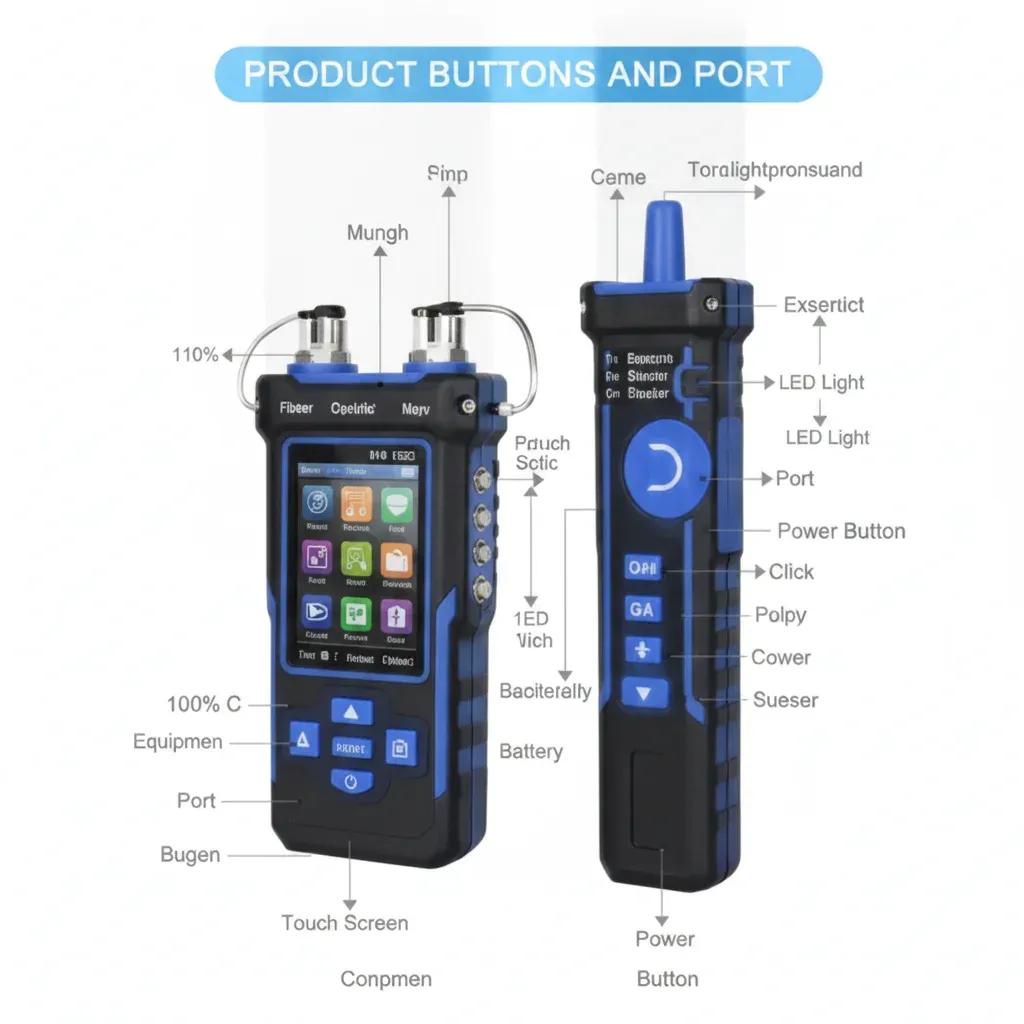
TL;DR: A cat6 cable tester is an essential diagnostic device used to verify the integrity of network cabling, identify wiring faults, and confirm correct RJ45 terminations. Based on our testing at EthernetCabl, using a reliable tester eliminates costly guesswork, instantly locating shorts, split pairs, and PoE issues to minimise downtime across UK homes and businesses.
What is a cat6 cable tester? At its core, a cat6 cable tester is a diagnostic tool used to verify electrical connections, trace wiring faults, and confirm correct pinouts on Category 6 network cables. When a network fault stops phones, tills, CCTV, access points or VoIP handsets from working, guessing is expensive. Therefore, a proper tester helps you find wiring faults quickly and proves whether the problem sits in the cable run, the patch lead, the PoE feed or the connected port. For UK buyers, this matters immensely in homes, offices, schools, warehouses and public-sector environments where downtime has a direct, measurable cost.
At EthernetCabl, our focus is simple: providing practical testing tools that replace multiple single-purpose devices. Based on our extensive field experience, a professional PoE network tester and network cable line tester can trace, map and diagnose Ethernet, PoE and even fibre faults far faster than trial-and-error swapping. Consequently, this guide explains exactly what a cat6 cable tester does, which features matter most in the UK market, and how to choose a model that fits your work.
Key Takeaways
- A cat6 cable tester checks whether Cat6 cabling is wired correctly and helps locate common faults such as opens, shorts, reversals, split pairs and mis-pins.
- The best models for UK buyers do more than basic continuity testing; moreover, you should look for wiremap, length measurement, PoE detection, port flashing and cable tracing.
- If you install or troubleshoot business networks, one multi-function tester can replace several separate tools and significantly speed up fault finding.
- For schools, NHS facilities, retail sites and offices, faster diagnostics reduce disruption and avoid unnecessary re-cabling.
- Always check compatibility with Cat5e, Cat6 and Cat6a installations commonly found across UK buildings.
What does a Cat6 cable tester do?
Simply put, a cat6 cable tester is a diagnostic tool used to verify the integrity and performance basics of twisted-pair Ethernet cabling terminated with RJ45 connectors. In straightforward terms, it tells you whether a Cat6 cable has been wired properly and whether the conductors are successfully reaching the correct pins at each end.
Furthermore, most testers work by sending signals through each conductor pair and analysing what returns. Depending on the model, the tool may identify:
- Open circuits
- Short circuits
- Crossed wires
- Reversed pairs
- Split pairs
- Shielding issues on screened cabling
- Cable length or distance to fault
- PoE voltage presence and pin mode
While a basic tester confirms continuity, a more capable professional unit supports day-to-day troubleshooting by combining mapping, tracing and PoE diagnostics in one device. This is particularly useful where structured cabling runs through walls, ceilings or risers and visual inspection is physically impossible.
Why is Cat6 testing important for UK networks?
Cat6 cabling remains widely used across UK commercial premises because it supports Gigabit Ethernet reliably and can serve many business applications well when installed correctly. However, good cable alone does not guarantee good network performance. According to UK guidelines for structured cabling (such as BS EN 50174), poor terminations, damaged conductors, crushed runs and incorrectly punched keystones can all create faults that are incredibly difficult to spot without testing.
In addition, this matters even more now because so many devices rely on network infrastructure well beyond desktop PCs. Wireless access points, IP cameras, VoIP phones, door entry systems and smart building controls often depend on both data connectivity and Power over Ethernet. As a result, a faulty run may not simply slow a connection; it may stop a critical endpoint from powering up altogether.
The importance of resilient connectivity in Britain is easy to see at a national level. According to Ofcom’s Connected Nations reporting, fixed broadband coverage and digital dependence across homes and organisations continue to increase year on year, making reliable internal cabling more important rather than less.[1] While broadband headlines often focus on external lines into buildings, our testing confirms that many real-world faults actually happen inside the premises on patching and horizontal cabling.
What faults can a Cat6 cable tester find?
Based on our testing of common network failures, a robust cat6 cable tester is capable of diagnosing several critical issues that disrupt connectivity.
How does it identify incorrect pinouts after termination?
If an installer has punched down or crimped the conductors in the wrong order against T568A or T568B standards, a wiremap test will show it immediately. Indeed, this is one of the most common faults on newly terminated outlets and patch leads.
Can a cable tester find breaks within the cable run?
Yes. An open circuit means one or more conductors are not making end-to-end contact. Consequently, this could be caused by poor termination, physical damage during installation or stress where cables have been bent too sharply.
Does it detect shorts between conductors?
A short circuit can prevent links from coming up properly or cause intermittent performance issues. High-quality testers identify exactly whether two cores are touching when they should not be.
Why do split pairs affect network performance?
A split pair is especially troublesome because continuity may appear acceptable at first glance, yet performance suffers badly due to pair mismatch. Better testers will explicitly identify this condition so you can correct the termination before users experience unstable throughput or packet loss.
How do you check for cable length issues?
Cat6 permanent links have strictly defined distance limits. If a run exceeds what Ethernet expects or includes excess patching that pushes it over practical limits, some advanced testers can estimate length using time-domain methods. Therefore, this helps installers verify compliance before officially commissioning a link.
Can a tester detect PoE faults?
If an access point or camera will not power up, PoE detection becomes absolutely essential. A modern multi-function device can quickly confirm whether voltage is present on the line and often indicate which specific pairs are carrying power.
How do you trace mystery ports in cabinets or wall outlets?
Cable tracing functions allow you to follow unlabelled runs without disconnecting everything blindly. If that sounds useful beyond this guide’s narrow topic, our pillar article on the network cable tracer in the UK explains tracing workflows in much more detail.
What is the difference between a basic and professional Cat6 cable tester?
Not every buyer needs certification-grade equipment. Nevertheless, there is a major difference between an entry-level continuity checker and a serious field tool designed for regular, demanding use.
Basic testers
A low-cost basic tester usually includes a main unit and a remote terminator. It simply confirms pin-to-pin continuity across an RJ45 cable run. For simple home use or quick patch lead checks, that may be entirely enough.
Professional testers
Conversely, a professional unit goes much further by combining several essential functions into one handheld device:
- Cable tracing through walls or dense bundles
- Comprehensive wiremap verification
Ready to upgrade your toolkit with EthernetCabl?
Shop the Pro Toolkit — £161.94